
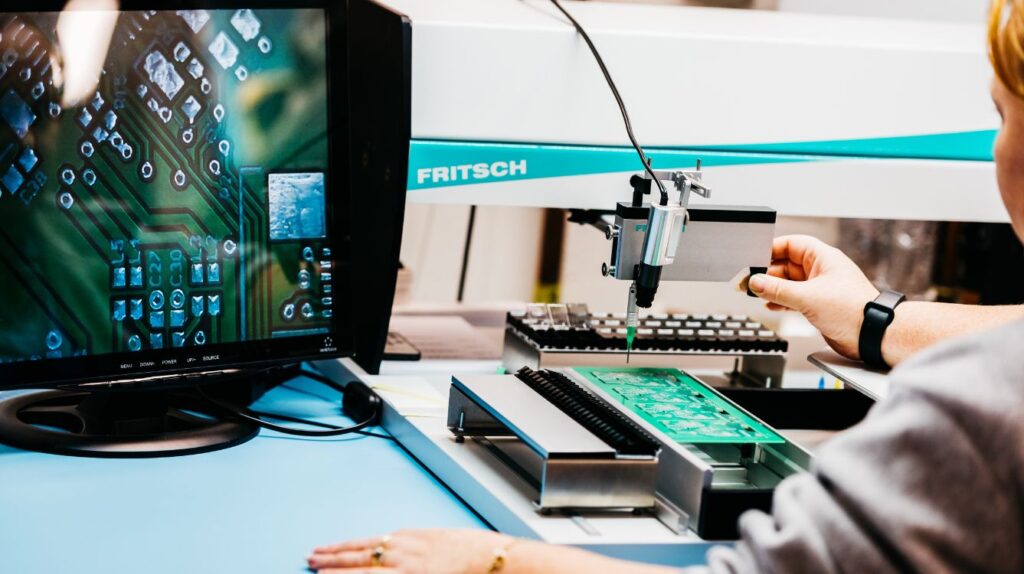
Image / Sellectronics
For engineers, supply chain specialists and defence professionals across the UK, aerospace grade components are the foundation of technologies that must operate flawlessly in environments where failure is potentially catastrophic.
For companies delivering commercial electronics assembly to the aerospace sector, the fundamentals may appear familiar – components are still placed, soldered and subjected to testing. However, beneath the surface lies a different philosophy shaped by rigorous risk mitigation, full traceability and an uncompromising commitment to reliability.
Electronics in aerospace engineering
Moving from standard builds represents a significant leap in both mindset and execution. Most electronics in everyday applications are built to IPC Class 2 standards. This level allows for minor cosmetic imperfections and assumes a typical operational lifecycle. The component will pass standard tests as long as it performs safely and efficiently, as intended.
Aerospace, however, operates under IPC Class 3, where the tolerance for imperfection effectively disappears. This is the standard reserved for high performance, mission-critical applications where continuous operation is essential.
If a solder joint fails due to poor wetting or a hidden void, there’s no opportunity for rework. The consequences can cascade rapidly, affecting navigation, communication, or control systems. In this context, all aerospace electronics must have rigorous inspection, tighter process controls and far greater scrutiny at every stage of production. Every joint, trace and component must meet a higher bar, structurally and electrically.
Demands of the environment
One of the defining challenges in aerospace electronics is the environment itself. Unlike terrestrial applications, systems must endure extreme and often rapidly changing conditions.
Thermal management is a constant concern. As aircrafts climb and descend, materials expand and contract due to temperature fluctuations. This introduces the challenges of Coefficient of Thermal Expansion mismatch, known as CTE, where different materials react at different rates. Over time, this can place stress on solder joints and interconnections, leading to fatigue and eventual failure. To counter this, aerospace grade assemblies utilise carefully selected materials designed to minimise these mismatches and maintain structural integrity.
Vibration and shock present another layer of complexity. From the moment of take-off, electronics are subjected to sustained mechanical stress. Turbulence adds to the challenges, so high glass transition temperature laminates are frequently used to ensure components remain firmly in place, alongside specialist adhesives or underfills. These materials effectively lock all the parts into position, reducing the risk of movement or detachment under stress.
Moisture, salt spray and altitude-related electrical phenomena, such as arcing, can all compromise a circuit. Conformal coating provides a critical line of defence. These thin chemical films are applied over assemblies to protect against contamination and environmental damage, ensuring long-term reliability even in the harshest of conditions.
Beyond visual inspections
Visual checks, while still important, are insufficient on their own. This is where advanced functional testing becomes essential. Manufacturers must simulate real-world operating conditions, when bespoke functional testing and boundary scan techniques allow engineers to probe deeper, identifying latent defects that might otherwise go unnoticed. For a contract electronics manufacturer operating in the aerospace sector, this level of testing is a core part of delivering confidence to customers who rely on these systems in critical applications.
Equally important is the human factor, as expertise can’t be totally automated. A multi-skilled and flexible team, trained specifically in aerospace standards such as AS9100, plays a crucial role in maintaining high quality.
Sellectronics’ understanding of processes, materials and risk ensures every build meets the stringent requirements expected of aerospace grade products. While our standard offerings align with IPC-A-610 Class 2, we’re fully equipped to deliver Class 3 assemblies when required. This flexibility allows us to support a broad range of applications, while maintaining the capability to meet the highest reliability standards.
Aerospace electronics manufacturers occupy a unique position within the supply chain as custodians of reliability. One of the most significant risks is the presence of grey market components. Counterfeit or substandard parts can infiltrate supply chains, often indistinguishable from genuine components at first glance. In a commercial context, this might result in reduced lifespan or performance issues. In aerospace, it’s simply unacceptable.
Maintaining a secure and traceable supply chain is critical. Every capacitor, integrated circuit and connector must be verified for authenticity. This requires robust supplier relationships, stringent procurement processes and comprehensive documentation.
Sellectronics places a strong emphasis on supply chain integrity. Our approach ensures every component used in a PCB assembly meets the required standards. This level of diligence extends across the entire product lifecycle, from initial prototyping through to full-scale production.
Reliability in aerospace electronics is the result of a fully integrated system that encompasses design, materials, manufacturing, testing and supply chain management. We have developed our capabilities over many years with this holistic view in mind, working closely with customers to create tailored test strategies.
By maintaining ownership from an initial enquiry through to final delivery, we ensure continuity and clarity throughout the process.
Standards, certification, and accountability
Operating within the aerospace industry demands adherence to certifications such as AS9100D and BS EN ISO 9001 – they represent a commitment to structured quality management and continuous improvement. Environmental considerations are also increasingly important; ISO 14001:2015 certification highlights a focus on sustainable practices, aligning with broader industry goals to reduce environmental impact while maintaining optimum performance.
Training plays a vital role in upholding these standards. Expertise in specifications such as IPC J-STD-001 ensures that employees are equipped with the knowledge required to meet the exacting demands of aerospace assembly. These certifications provide reassurance that a manufacturer has embedded certain standards into their operational framework.
Ultimately, the distinction between standard electronics and aerospace grade assemblies lies in their purpose. While a commercial PCB may be a commodity, designed for cost efficiency and acceptable performance, an aerospace PCB is a mission-critical asset, engineered to perform under conditions where failure isn’t an option.
As the sector continues to evolve, with increasing emphasis on efficiency, safety and sustainability, the role of electronics becomes even more significant. Every improvement in reliability contributes to safer flights, more efficient systems and greater confidence in the technology that underpins aviation.