
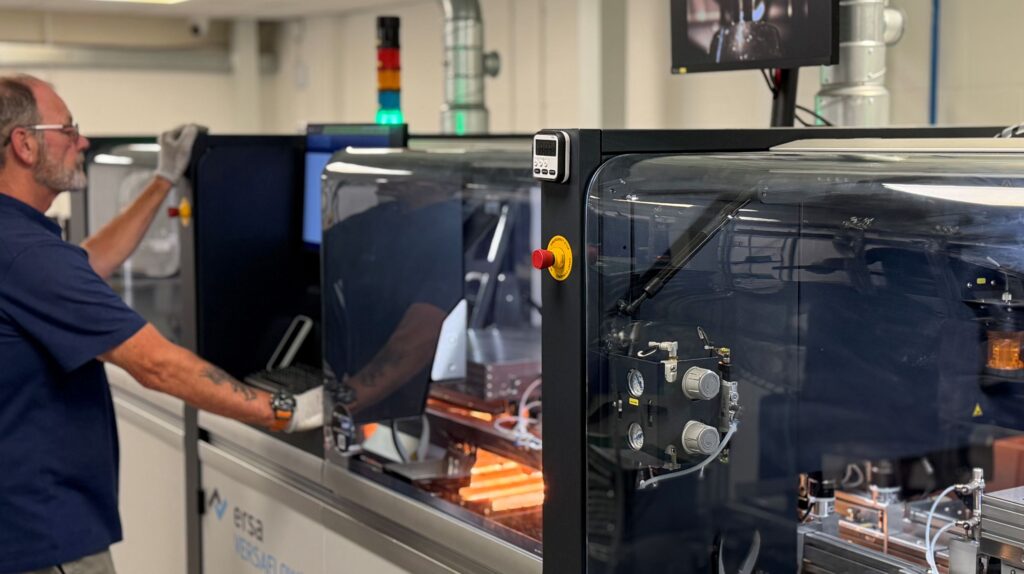
Image / Sellectronics
The aerospace sector has always demanded exceptional levels of engineering excellence. Whether manufacturing systems for commercial aviation, defence platforms, satellites, or advanced unmanned aircraft, there’s no room for compromise.
Every electronic assembly has the potential to influence operational performance, passenger safety and mission success: contract electronics manufacturing plays a critical role in supporting the modern aerospace industry.
Systems and components must operate efficiently when exposed to extreme temperatures, vibration, altitude changes, electromagnetic interference and prolonged operational demands. Even the smallest manufacturing defect, such as an imperfect solder joint or an incorrectly sourced component, can have significant consequences.
Selecting the right electronics manufacturing partner is about far more than production capacity: it requires confidence in regulatory compliance, quality assurance, precision manufacturing and complete traceability at every stage.
The importance of compliance
The global aerospace sector operates under some of the strictest manufacturing standards in existence because the risks associated with failure are exceptionally high. Unlike high-volume consumer products, aerospace assemblies can’t rely on statistical tolerance for defects; every single product must meet exacting standards.
Compliance must extend well beyond documentation. It influences supplier selection, manufacturing processes, quality inspections, employee training, risk assessment and continuous monitoring throughout the production lifecycle.
Rather than viewing compliance as an administrative checklist, manufacturers must embed it into their company culture. Continuous improvement, preventative action, rigorous auditing and meticulous process control all become part of everyday operations. This proactive approach significantly reduces risks and delivers the consistency customers require.
Requirements for aerospace electronics manufacturers
Published by the International Aerospace Quality Group (IAQG), AS9100 is the internationally recognised quality management system specifically developed for the aviation, space and defence sectors. While it builds on the principles of ISO 9001, AS9100 introduces significantly more demanding requirements relating to risk management, product safety, configuration management, supplier control and regulatory compliance.
It isn’t simply another ISO certification. The standard is an aerospace-specific framework designed to address the unique challenges of high-reliability manufacturing. For original equipment manufacturers (OEMs) outsourcing aerospace electronics production, AS9100 certification provides confidence that their manufacturing partner has implemented robust quality systems, effective communication processes, comprehensive documentation and stringent operational controls.
However, simply holding AS9100 certification is only part of the picture. The standard has evolved considerably over time through several revisions, identified by the letters A, B, C and D. Each revision introduced stricter requirements reflecting the industry’s growing emphasis on quality and operational excellence.
AS9100 Revision C, introduced in 2009, focused heavily on organisations that documented quality procedures, but failed to follow them consistently. It reinforced the importance of delivering products on time, while ensuring documented processes genuinely reflected daily operations.
The latest update, AS9100 Revision D, introduced in 2016, placed even greater emphasis on risk-based thinking, supplier management, operational planning, product safety and control of outsourced processes. Manufacturers must demonstrate their commitment to continually improving their systems while proactively identifying and reducing manufacturing risks. For aerospace customers, AS9100D certification is one of the clearest indicators that an electronics manufacturing partner operates at the highest internationally recognised standards.
Manufacturers frequently work within the wider regulatory framework established by authorities including the UK Civil Aviation Authority, the European Union Aviation Safety Agency and the Federal Aviation Administration (FAA) in the United States. These organisations establish the airworthiness requirements that products must ultimately satisfy.
Additional standards may also apply depending on the organisation’s role within the supply chain. AS9110 supports Maintenance, Repair and Overhaul (MRO) organisations, while AS9120 governs the sector’s distributors and stockists. Environmental legislation such as REACH regulates hazardous substances, while export controls including ITAR introduce further compliance obligations for defence-related projects.
Electronics in aerospace engineering
Modern electronics are becoming increasingly sophisticated as aircraft, spacecraft and defence systems rely more heavily on digital technologies, autonomous capabilities and complex electronic control systems. This growing technological complexity places even greater pressure on manufacturing quality.
Precision during printed circuit board assembly begins long before the first component is placed onto the board. Component sourcing must eliminate any possibility of counterfeit parts entering the supply chain. Every capacitor, resistor, integrated circuit, diode, connector and bare PCB should be fully traceable back to its original manufacturer.
If an issue is ever identified within a specific component batch, manufacturers must be able to identify every assembly containing that component immediately. This level of visibility allows rapid investigation, containment, corrective action and regulatory reporting where required.
Manufacturing environments themselves must also support precision. Climate controlled storage protects moisture-sensitive components and automated placement equipment ensures exceptional accuracy during assembly. Automated Optical Inspection systems verify solder quality and component positioning throughout production, identifying defects that may be invisible to the human eye.
Where solder joints are hidden beneath Ball Grid Array (BGA) packages or other advanced component types, X-ray inspection becomes indispensable. This technology enables engineers to inspect internal solder connections without damaging the assembly, providing another layer of confidence before products proceed to testing.
Electrical testing, functional verification and documented quality inspections ensure every assembly performs exactly as intended before shipment. Each stage contributes to an integrated quality system.
Evaluating electronics manufacturers
Reputable aerospace manufacturers use certification as an active operational framework. Their quality systems are visible throughout the factory, supported by documented procedures, regular internal audits, employee training and continuous improvement programmes. Aerospace-grade PCBA demands far more than visual inspection alone. Advanced technologies provide confidence that assemblies consistently meet demanding requirements.
Equally important is the manufacturer’s approach to accountability. Manufacturing partners should welcome customer audits, maintain transparent communication throughout projects, provide complete production documentation and openly demonstrate how quality controls operate. This openness reflects confidence in their processes and strengthens long-term customer relationships.
Organisations should consider the manufacturer’s experience managing complex regulatory requirements. These capabilities distinguish experienced aerospace specialists from electronics manufacturers serving less demanding industries.
Why choose Sellectronics for aerospace manufacturing?
We combine technical expertise with an unwavering commitment to quality. Our manufacturing processes are built around robust quality management systems that align with AS9100 requirements. Every project benefits from structured risk management, rigorous process control and consistent quality assurance. We incorporate continuous improvement into our everyday operations, helping clients meet increasingly demanding aerospace expectations. Precision remains central to every stage of production, from carefully controlled component sourcing to advanced inspection technologies and comprehensive testing procedures. Every PCBA is manufactured with accuracy, consistency and reliability in mind. Complete component traceability provides customers with greater confidence and reduces risk, supporting full regulatory compliance.
Sellectronics also understands that aerospace programmes rarely follow a single production model. Early-stage development often requires rapid prototyping, engineering collaboration and design support before progressing towards larger production volumes. By offering flexibility across prototype builds, low-volume production and scalable manufacturing, we support customers throughout the entire product lifecycle.
In an industry where safety, precision and reliability define success, choosing the right manufacturing partner is one of the most important decisions an aerospace organisation can make. Sellectronics’ mission-critical aerospace components are manufactured to the highest possible standards every time.