
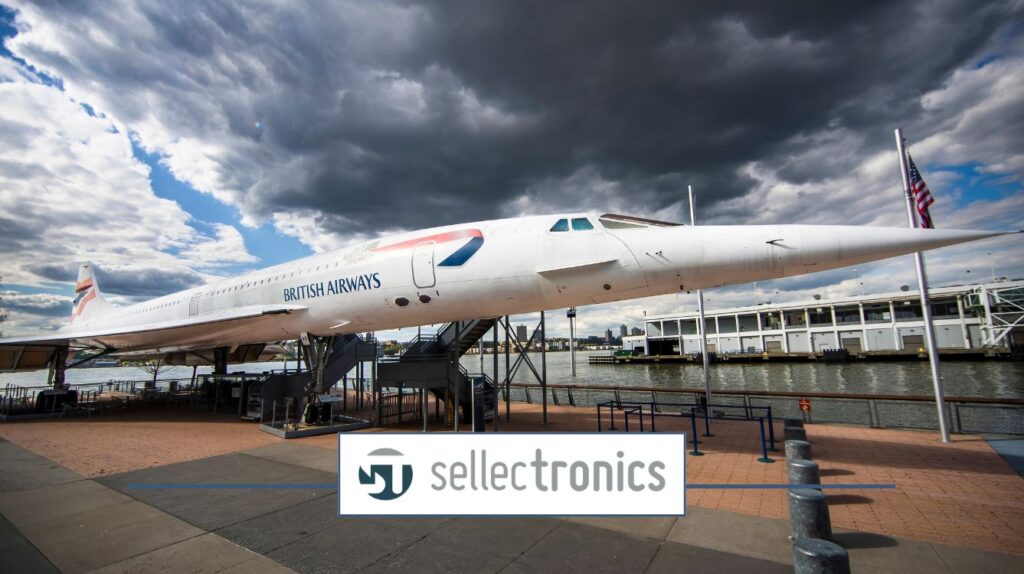
© Karolis Kavolelis / Shutterstock
The word “supersonic” still stirs something in the imagination, 22 years after Concorde’s last commercial flight. Whether you’re an aerospace engineer, a frequent flyer, or just someone fascinated by the idea of zooming across the Atlantic at twice the speed of sound, the allure of supersonic travel is hard to resist.
Recently, there’s been a noticeable buzz in the air – a resurgence of interest in a technology once thought to be lost to time. From murmurs about a potential Concorde return to the bold ambitions of companies like Boom Supersonic, the idea of hopping between continents in under four hours is back on the table.
A new wave of excitement
Much of the anticipation is being driven by nostalgia for the Concorde plane – the sleek, delta-winged marvel that once symbolised aviation’s future. Although it last flew commercially in 2003, the jet with a maximum cruising speed of 1,354 miles an hour never really left the public consciousness. The idea that it might fly again, even in spirit, has sparked renewed interest.
Speculation around a Concorde return has been fuelled by social media posts, vintage footage and the occasional rumour of restoration projects. While a true revival seems unlikely, it has laid the emotional groundwork for newer ventures.
Boom Supersonic is a company founded by Blake Scholl, a tech entrepreneur and aviation enthusiast who’s channelling Silicon Valley energy into aerospace innovation. Boom is developing Overture, a supersonic jet aimed at reviving fast, premium air travel. They’re not just drawing inspiration from Concorde: they’re engineering an entirely new future for high-speed flights.
Concorde: An icon that fell short
To understand why the dream faded, we have to look back. Concorde was more than just a jet. It was a triumph of aerospace engineering, representing a diplomatic collaboration between Britain and France and a technological marvel. Capable of crossing the Atlantic in just over three hours, it set the gold standard for the fastest commercial aircraft.
Despite its elegance and speed, the jet aircraft was ultimately unsustainable. High operating costs, limited seating capacity and the economic downturn of the 2000s proved too much. The aircraft was incredibly expensive to maintain, while the fuel efficiency didn’t match the model needed for long-term commercial success. Even worse, the infamous sonic boom made supersonic travel over land legally impossible in most countries, severely limiting Concorde’s route potential.
While its retirement marked the end of an era, it also left behind valuable lessons in aerodynamic design, materials science and public perception – details that new players are now applying in more modern contexts.
Future of high-speed air travel
Boom Supersonic’s Overture isn’t an attempt to rebuild the past: it’s a carefully engineered leap forwards. Overture is designed to travel at 1,304 mph, making it slightly slower than Concorde, but vastly more fuel-efficient. With a focus on sustainable aviation fuel, reduced noise pollution and improved operational economics, it aims to bring supersonic travel to the 21st century, not just as a spectacle, but as a commercially viable service.
Earlier this year, Boom’s XB-1 demonstrator aircraft broke the sound barrier, making history as the first privately developed supersonic jet to do so. Its “boomless cruise” capability (a way of flying fast without the disruptive sonic boom reaching the ground) could help lift the longstanding US ban on civilian supersonic flights over land. NASA and the Federal Aviation Administration are now re-examining these regulations, encouraged by the prospect of a new era in air travel that avoids the pitfalls of its predecessor.
What’s perhaps most impressive is that engineers at Boom aren’t just building an airframe. They’re developing the Symphony engine; a 35,000 lb thrust, medium-bypass turbofan designed specifically for Overture. This dual focus on airframe and propulsion underlines the challenges of developing the fastest commercial aircraft today. It requires reinventing how engines are designed, tested and certified, all under tight timelines and massive financial pressure.
Why the aerospace industry is paying attention
The return of supersonic travel represents a shift in what’s possible within commercial aviation. For contract electronics manufacturers and aerospace suppliers, it means a whole new class of systems and components will need to be engineered, tested and produced at scale. Supersonic jets require incredibly precise avionics, lightweight materials, and compact, durable electronics. Everything from fly-by-wire systems to cockpit displays and high-performance sensors must be rugged enough to handle the intense temperatures, pressures and speed of supersonic flight.
Companies involved in contract electronics manufacturing are already being looped into development pipelines. Just as the jet age of the 1950s gave rise to massive growth in aerospace research and development, today’s supersonic revival is creating new demand for innovation in power systems, signal processing, high-density circuit boards and more. This is creating a golden opportunity for electronics manufacturers to help define what’s possible in the future.
Supersonic travel and the business case
The big question remains: who will actually fly on these planes? Unlike the Concorde era, where exclusivity came with eye-watering ticket prices, today’s aviation market is broader. Airlines are eyeing supersonic travel for high-value business routes and premium customers who prioritise speed. While initial operations will probably focus on trans-oceanic travel, such as from New York to London, or Tokyo to San Francisco, the goal is to expand to high-density business corridors globally.
Boom claims Overture could cut transatlantic flight times in half, while keeping operating costs within range of premium subsonic flights. Though environmental and regulatory hurdles remain, the economic calculus is shifting. Aircraft that can perform more trips per day, reduce crew hours and draw higher fares for speed could actually be profitable, especially in markets where time is money.
A sky full of challenges
Even with all the momentum, there are still major challenges ahead. Sonic boom mitigation, fuel efficiency, airport compatibility and passenger comfort at high speeds are not trivial engineering tasks. Nor is the regulatory path, as the FAA has no precedent for certifying a modern supersonic airliner. Boom’s decision to build both the airframe and engine also increases the complexity.
However, the enthusiasm is real. With more than £527 million raised and advance orders placed by major airlines such as American, United and Japan Airlines, Boom has already pulled off what many thought was impossible: making supersonic travel relevant again. Whether it can meet its 2030 target for commercial service is another story. Even aerospace giants like Boeing and Airbus typically take a decade or more to bring new aircraft from drawing board to runway.
As Overture inches closer to becoming a reality, it’s clear that supersonic travel isn’t just a nostalgic dream. The aerospace industry is watching closely, not only because the technology is exciting, but because it’s laying the foundation for a new category of aircraft, higher expectations from passengers, and a new generation of design and manufacturing challenges.