
© Vasin Lee / Shutterstock
Airports play a vital role in transporting people and goods across the world, but as the importance of the aviation industry grows, so do the risks.
A crucial factor, airport security ensures the safety of passengers, crew members and other employees, while also protecting our borders from unwanted intruders and threats.
The airport security system evolution is taking place continually, enabling crime-fighters to remain one step ahead of any threats, and as criminals increasingly use a more high-tech approach, airport PCB security systems are playing a bigger role in combating illegal activities.
Protecting passengers and employees
Navigating our way through the many security measures and checkpoints at airports may seem time-consuming and a nuisance, but its importance is undeniable. They are in place to ensure that everyone involved in air travel, whether passengers or crew, can do so in safety.
The security measures are every nation’s first line of defence against malicious activities and potential threats that can compromise our wellbeing and as such, security systems assist crime-fighting organisations to minimise risks by identifying potential threats and deflecting them before they pose a real danger.
Trained security staff, various technologies and the latest surveillance systems work together to create a protective barrier against criminals. In fact, many different components are utilised in airport security, with printed circuit boards and PCB assembly services at the core of today’s airport safety operations.
Examples of security technology that requires PCB assemblies include CCTV systems, door entry systems, access control management, airport customer information systems, fire safety management and more.
Protection from criminal activity
Attacks and deliberate sabotage create major hazards for airports, as criminals can target the aircraft, terminals, public facilities, runways and vehicles.
Airport security measures address these dangers via access controls, baggage and passenger screening, CCTV surveillance systems, coordinating with law enforcement organisations, risk assessment and intelligence-sharing.
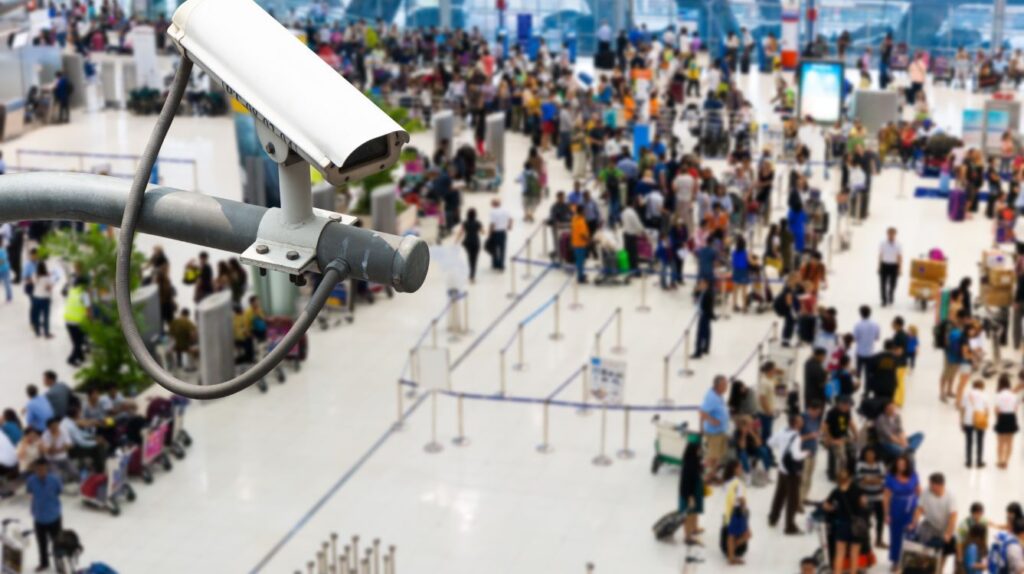
CCTV and facial recognition technology can help identify known criminals before they can commit a crime and keep them under surveillance. These systems rely heavily on PCB assembly to capture video surveillance data, integrating image sensors, video encoding and decoding modules, video processing circuits and communication components.
The technology enables real-time recording and monitoring and remote access to the video feeds.
Cyberattacks
Cyberattacks and data breaches have become the scourge of modern air travel, as they undermine the safety of crucial operational systems and threaten airport passenger confidentiality. Airport databases and networks are susceptible to cyberattacks, ranging from the sabotage of operations to data theft and ransom demands.
Airport chiefs deploy high-tech measures to mitigate the risks – such as introducing antivirus software, state-of-the-art encryptions, authentication protocols, firewalls and backup systems, all of which operate through the use of PCBs.
Insider threats
Airport security can also be threatened by hostile insiders, such as contractors and employees who are able to access sensitive information. Operations can be compromised by theft, drugs smuggling and even terrorism when employees are not who they seem.
To combat the risks, airport security systems enforce access controls, undertake thorough personnel screening, install monitoring systems and keep security procedures and protocols continually updated.
The PCBs used in monitoring systems and other security measures are a vital part of airport security.
Natural disasters
As well as deliberate threats to airport safety, natural disasters such as earthquakes, hurricanes, floods, volcanic eruptions and other extreme weather conditions can put people’s lives at risk.
Natural disasters can lead to temporarily shutting down runways, power failures, clearing debris and coordinating emergency response procedures. To minimise risks to life, airports must have efficient crisis response teams, effective channels of communication, solid backup plans and strategic recovery plans.
Again, PCBs are vital in the state-of-the-art airport communication systems and in coordinating efforts and teams following a natural disaster.
Airport safety and security needs to remain one step ahead of the game, so modern technology and PCBs are continually evolving to combat criminal activity.