
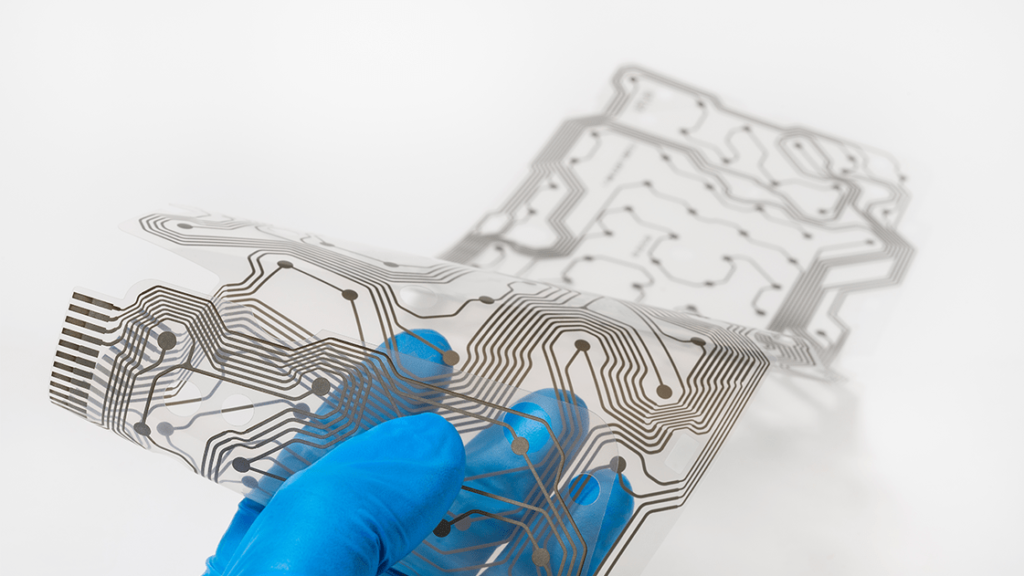
© KpixMining / Shutterstock
Flexible printed circuit boards are growing ever more popular in the modern world: although, increasingly sophisticated technology is allowing us to use both flexible and rigid-flex PCBs in a range of sectors and industries.
Flexible PCBs
Typically divided up into single, double or multilayer circuits; flexible PCBs, or flex circuits as they are otherwise known, are built on a flexible base that can be bent, twisted and folded.
The usual components of a flexible circuit include a dielectric substrate film, which is the best material for the circuit. Typically made of copper, electrical components are joined to different parts of the circuit using an adhesive material.
Strengths and applications
Due to the elastic nature of flexible PCBs, they are easily bent and can be used to greater effect for unique designs. You can shape them to fit spaces that rigid circuits can’t be adapted to and around edges and folds.
Flexible circuits also take up less space overall, which reduces the amount of weight on the motherboard of whatever application it’s being used for. This helps with thermal management, allowing for better dissipation of heat.
Owing to their smaller, more flexible size; these types of circuits are used a lot in modern electronics, and in appliances that include Smartphones, tablets, cameras, laptops and printers. They’re also used in the medical industry, as they are a reliable source of circuitry for cochlear implants and pacemakers.
Rigid-Flex PCBs
As the name suggests, a rigid flex PCB is a circuit board built on a rigid base layer that cannot bend. This is a hybrid which combines the best parts of both flexible and rigid circuit boards. Most rigid flex boards consist of a number of layers of flexible circuit substrates added to one or more rigid boards, externally and/or internally, depending on the application.
Benefits and applications
In comparison to more traditional boards, rigid-flex circuits have a lot of benefits. A good deal lighter, they need less packaging and are comparatively cheap. They can also resist sudden temperature changes in manufacturing and can be exposed to harsh conditions while in use. Highly effective, they can be relied upon in a lot of different situations.
Used across a wide variety of sectors, they play an important role in medical technology as part of drug-delivery systems, imaging technology and wireless controls. As key components for both weapons system guidance and communication systems, they can also be used in military applications. They can also be utilised in aerospace for radar equipment and GPS, as well as consumer appliances like ovens and TVs.
Which PCB is right for me?
We can help with PCB prototype to make sure you get a chance to test things and also the assembly of a full complement of circuit boards, as required.
As a valuable resource, with almost infinite application possibilities, PCBs are rising in demand owing to their sheer flexibility. After all, as technology advances and develops, it is vital to use modern hardware to guarantee sleek, reliable products.